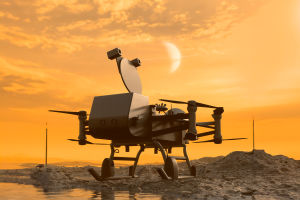
Modern agriculture continues to evolve through technologies that improve productivity while using resources more efficiently.
Among these innovations, unmanned aerial vehicles (UAVs), commonly known as drones, have become valuable tools for precision crop management.
Equipped with advanced navigation systems, intelligent flight control, and precision spraying technology, agricultural UAVs enable accurate application of crop treatments while supporting more sustainable farming practices.
Precision Agriculture from Above
Agricultural UAV spraying is the aerial application of crop treatments using unmanned aircraft equipped with specialized spraying systems. These aircraft operate with satellite-based positioning, automated flight planning, and stable flight-control technology to follow predetermined routes with high accuracy. Adjustable nozzles and electronically controlled flow systems regulate spray output, helping distribute droplets evenly across crop canopies.
Unlike conventional ground-based spraying equipment, UAVs can access fields with uneven terrain, soft soils, narrow crop rows, and sloped landscapes without physically contacting the crops. This minimizes soil disturbance and reduces mechanical damage to plants while maintaining consistent application performance.
Improving Operational Efficiency
One of the primary advantages of agricultural UAVs is their ability to perform spraying operations efficiently during critical crop growth stages. The area treated during a working day depends on aircraft capacity, battery performance, flight parameters, field conditions, and application requirements. Even so, UAVs can significantly reduce the time required for spraying compared with many conventional field operations.
Automated flight paths improve consistency by reducing overlap and minimizing untreated areas. This level of precision supports more uniform coverage while improving overall operational efficiency.
Precision Application and Resource Management
Modern agricultural UAVs integrate advanced sensing technologies and precision application systems to support data-driven crop management. Field observations collected before or during operations can identify variations in crop condition, allowing application rates to be adjusted where precision spraying systems are available.
Several factors influence spray performance, including droplet size, nozzle selection, spray pressure, flight speed, flight altitude, and environmental conditions. Carefully managing these variables improves droplet deposition throughout the crop canopy while reducing unnecessary off-target movement. Appropriate operating practices also help minimize spray drift and support more efficient use of agricultural inputs.
This precision-based approach contributes to improved resource efficiency while reducing unnecessary environmental exposure.
Reducing Labor Requirements
Agricultural UAVs simplify field operations by allowing trained operators to manage spraying remotely through ground control systems. This reduces the need for workers to carry heavy spraying equipment across large agricultural areas and limits direct exposure during field applications.
Because UAVs operate above the crop canopy, they avoid soil compaction caused by heavy ground machinery and reduce physical contact with growing plants. Their electrically powered systems also require relatively low operational energy, contributing to efficient field management.
Supporting Environmental Sustainability
Precision spraying supports sustainable agricultural management by applying treatments where they are needed based on crop conditions and operational planning. Accurate navigation, controlled droplet application, and optimized flight paths help reduce unnecessary product use while limiting environmental losses.
Maintaining appropriate flight heights above the crop canopy and operating under suitable weather conditions further improve droplet deposition and reduce the likelihood of off-target movement toward surrounding vegetation and water resources.
Applications Across Agriculture
Agricultural UAV spraying is used across a wide range of agricultural systems.
Cereal crops such as wheat, corn, and rice benefit from timely crop protection and nutrient applications during important growth stages. Oilseed crops, including rapeseed and sunflower, receive targeted treatments throughout their development. Legume crops such as soybeans also benefit from carefully managed applications during sensitive growth periods.
Fruit orchards use UAVs to apply nutritional treatments and crop protection products while improving access to tree canopies. Grasslands benefit from efficient monitoring and large-area treatment, while forested landscapes use UAVs to monitor vegetation health and detect insect activity across extensive areas.
Current Technical Challenges
Despite their many advantages, agricultural UAV spraying continues to present technical challenges.
Battery capacity limits flight duration and requires periodic battery replacement during extended operations. Wind speed, temperature, and humidity influence droplet movement and overall application performance. Complex terrain may require advanced terrain-following technology to maintain consistent spray height above crop canopies.
Equipment investment remains a consideration for some agricultural operations, and effective use requires appropriate training in both UAV operation and precision crop management. Continued advances in battery technology, autonomous navigation, sensing systems, and spray-control technologies are expected to further improve operational performance.
Agricultural UAV spraying represents a significant advancement in precision agriculture by combining automated flight, intelligent navigation, and controlled application technologies. These systems improve the accuracy of crop treatment while supporting more efficient use of agricultural resources and reducing unnecessary environmental exposure. As sensing technologies, autonomous navigation, and precision application systems continue to advance, agricultural UAVs are expected to play an increasingly important role in modern farming. Their ability to deliver accurate, data-driven crop management supports the continued development of more productive, resource-efficient, and scientifically informed agricultural practices.