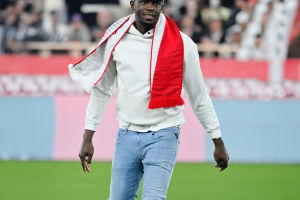
Mondo Duplantis flew over a bar at the Paris Olympics and broke a world record in about six seconds.
What the cameras couldn't show was the months of underwater pool sessions, the endless sprint drills, the years of building controlled fearlessness that his father and coach Greg Duplantis spent engineering.
That is the reality of track and field at the Olympic level — every brief moment of brilliance is the product of a very long, very specific process.
Core Is the Foundation of Everything
Whether you're throwing a shot put, launching a javelin, or sprinting 100 meters, coaches consistently point to the core as the thing that holds everything together. Shot put coach Paul Wilson uses a simple analogy: think of a tree — if the core is weak, the tree falls over. His athletes build full-body strength with a focus on rotational stability, explosive power, and functional movements rather than isolated muscle work. The goal is never bulk. Too much muscle mass leads to rigidity, which is the enemy of a long, fluid release. Throwers need to be loose enough to generate a long extension at the moment of release — something a tight, overdeveloped upper body makes impossible.
You Throw With Your Legs, Not Your Arms
One of the most counterintuitive things beginners learn in throwing events is that the power doesn't come from the arms. It comes from the legs and the ground up. Legs carry you all day, so they're simply stronger. The arms are the final link in the chain, not the engine. Wilson describes the ideal throwing motion like twisting an elastic band — the upper body faces one way while the legs continue rotating in the other direction, generating the torque that eventually releases the implement. Mastering that coordination, the rhythm of going fast on entry and then releasing explosive power at the front, takes thousands of repetitions before it starts to feel natural.
Precision Speed vs. All-Out Speed
In pole vault, the run-up isn't just about being fast — it's about being precisely fast. Greg Duplantis makes a clear distinction between sprinting and vaulting. A sprinter is trying to go as fast as possible, full stop. A pole vaulter needs to hit a specific mark on the ground within a tight range, or the whole jump falls apart. That requires what Greg calls "maximum controlled speed" — essentially running at near-top pace while maintaining the accuracy of a technician. It's a harder skill than pure speed, and it's one reason that pole vaulting requires an unusual combination of speed, strength, and what Greg simply calls controlled fearlessness.
Drilling the Weird Stuff
Heptathlon coach Tiffany Hogan uses underwater vaulting sessions to help athletes feel the upside-down swing phase of the pole vault in slow motion. It looks strange and is intentionally strange — the point is to let the body experience a movement that is physically foreign before attempting it at full speed above a foam mat. Plyometrics — box drops, bounding, stair runs — build the reactive power needed for jumpers. The long jump and hurdles share enough movement patterns that coaches often train them together during the same session, pairing events that reinforce each other's rhythm and take-off mechanics.
Body Type Is Part of the Story
Hogan competed at different body weights over her career and saw clearly how her performance shifted across events. Lighter, and she jumped better. Heavier, and she threw further. That is the honest reality of track and field — body type matters, and coaches work with it rather than against it. Pole vaulters tend toward lean and long. Throwers carry more mass but stay functionally mobile. That diversity is, as Hogan puts it, one of the most exciting things about the sport: there really is an event for every kind of athlete.
Track and field rewards people who are willing to work on the details that nobody in the stands will ever notice. The six seconds of flight time is just the public-facing tip of an enormous, invisible training iceberg.